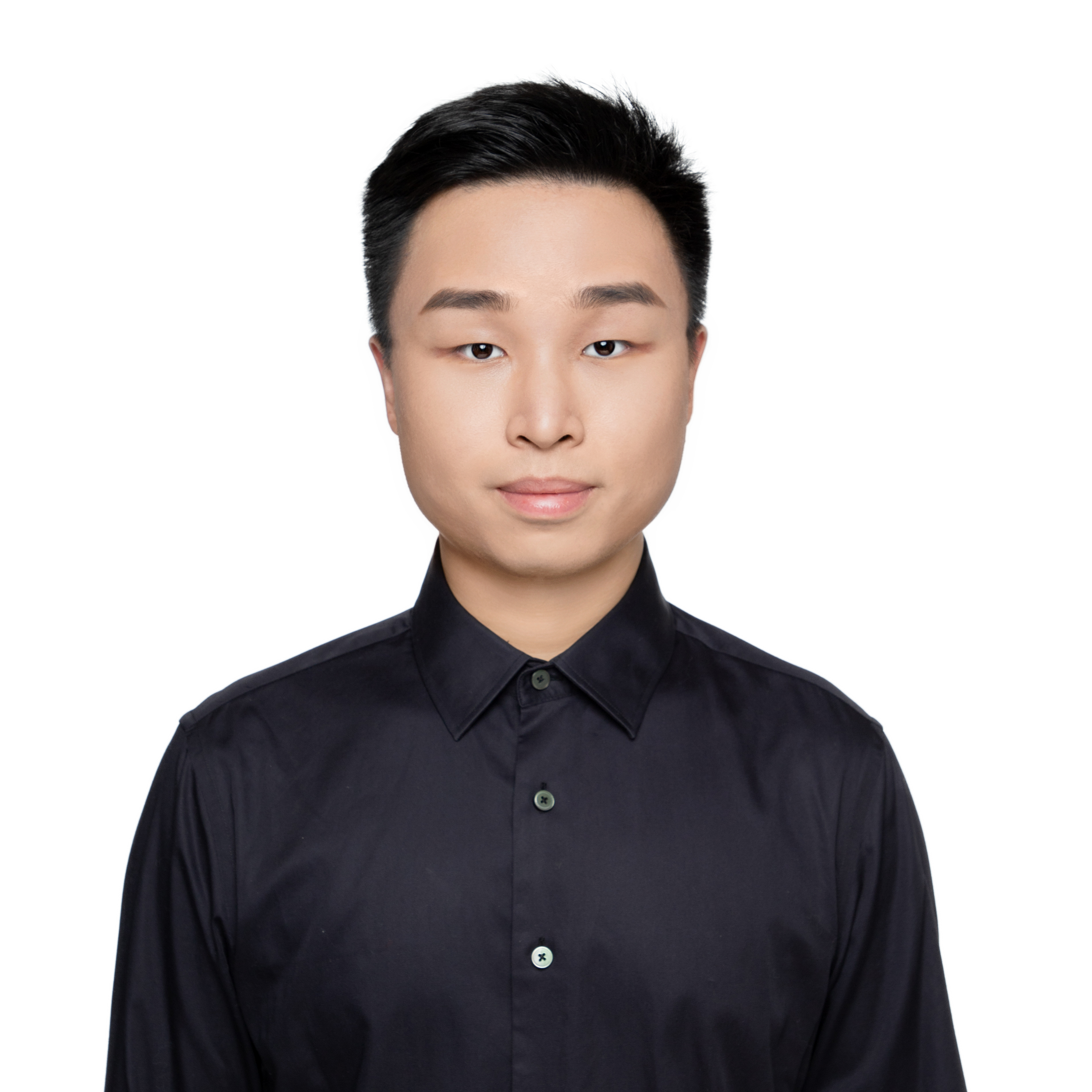
Xu Chen
Ph.D. student at UESTC working on learning-based autonomous systems.
Research
I am a Ph.D. student at UESTC, advised by Prof. Kai Zheng. Prof. Han Su was my master's advisor.
I study how AI systems acquire reusable knowledge from data and interaction, make reliable decisions under real-world constraints, and continually improve after deployment. Databases are my primary testbed. My research has progressed from learning individual system decisions to learning transferable system knowledge and, finally, to building agents that act on and continually update that knowledge.
My work has appeared at VLDB, SIGMOD, and ICDE, and in The VLDB Journal. DBAgent has been validated in production at Huawei Cloud DWS, and I have also worked with ByteDance AI Infra and Alibaba DAMO Academy.
Research Themes
Learning to optimize systems.
I develop learning-based methods for query optimization, cost and cardinality estimation, data layout, and resource management while preserving the structure and reliability of mature system components.
Learning transferable representations.
I study reusable representations of data distributions, workloads, and system states that can transfer across databases and reduce the need for retraining.
Learning to act and improve.
I study tool-using agents that learn from interaction trajectories, domain knowledge, and system feedback, with a focus on agentic reinforcement learning and continual self-improvement.
Selected Work
DBAgent — Closed-loop autonomous database operations.
DBAgent is an RL-based, tool-using agent for multi-step database diagnosis and optimization, closing the loop between system signals, actions, and feedback. It has been validated in production at Huawei Cloud DWS.
LEON / LEON+ — Learning inside a mature optimizer.
LEON and LEON+ embed learning into a mature optimizer's search process to improve plan selection while preserving the optimizer's established structure.
DACE / General Cardinality Estimation — Transferable system knowledge.
DACE learns database-agnostic cost representations. My ongoing cardinality-estimation research extends this direction by exploring reusable distribution representations across databases.
Self-learning Agents — Learning from interaction.
My ongoing research studies how self-learning agents extract reusable domain knowledge and implicit world models from interaction transitions and self-exploration. At ByteDance AI Infra, I worked on rollout infrastructure for multi-tool agentic reinforcement learning.
Selected Publications
DBAgent: An RL-Based Agent for Autonomous Database Operations and Maintenance.
VLDB, 2026. * means equal contribution.
LEON+: Towards Robust ML-aided Query Optimization.
VLDB Journal, accepted in March 2026. * means equal contribution.
Optimizing Block Skipping for High-Dimensional Data with Learned Adaptive Curve.
SIGMOD, 2025.
DACE: A Database-Agnostic Cost Estimator.
ICDE, 2024.
LEON: A New Framework for ML-Aided Query Optimization.
VLDB, 2023.
BASE: Bridging the Gap between Cost and Latency for Query Optimization.
VLDB, 2023.
Full publication list: Google Scholar · DBLP